Limited Objective Data
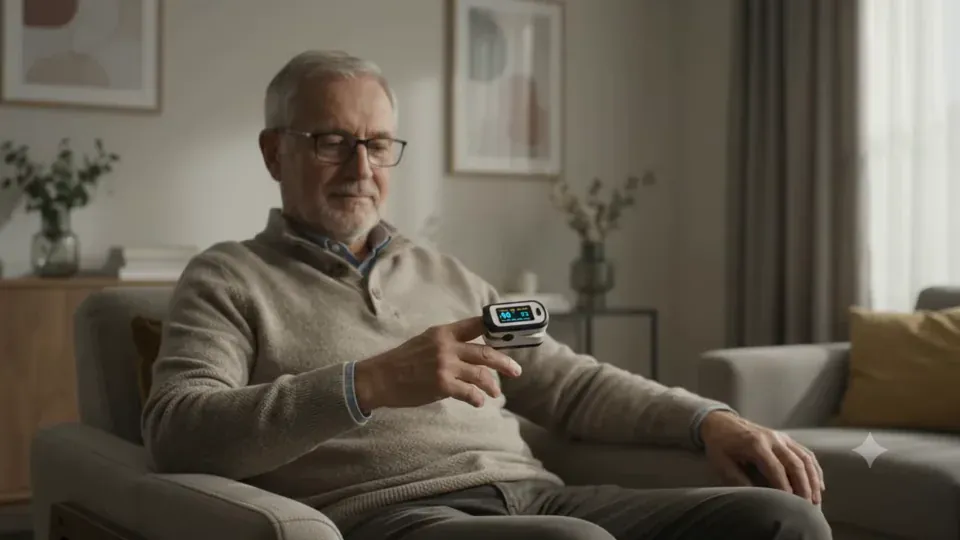
Oxygen saturation measured during an office visit may not reflect what a patient experiences at home or during daily activities.
Support patients with COPD and other respiratory conditions through scheduled or symptom-driven SpO₂ measurements at home. Readings transmit automatically to the Carematix portal, helping pulmonology teams review objective data between visits and coordinate follow-up based on practice-defined protocols.
Managing chronic respiratory disease between visits can be difficult when care teams must rely primarily on patient-reported symptoms and isolated office measurements.
Oxygen saturation measured during an office visit may not reflect what a patient experiences at home or during daily activities.
New symptoms or changes in oxygen saturation may occur between scheduled appointments without timely visibility for the care team.
Technology requirements and manual reporting can make it harder for some patients to participate consistently in remote monitoring.
Connect patient's remote monitoring device activity, care-team workflows, and operational records in one clearer program view.
Coordinate device fulfillment, activation, and ongoing support through one program workflow.
Set the monitoring and escalation approach that fits your clinical team and population.
Keep monitoring activity and care-team documentation organized for operational review.
Carematix helps pulmonology teams incorporate home SpO₂ and pulse readings into structured remote patient monitoring workflows.
Patient-initiated readings transmit automatically to the Carematix portal without manual reporting or additional technology.
Set program-level or patient-specific parameters to help care teams identify readings that may warrant review.
Review current and historical reading data to provide trends alongside symptoms, clinical history, and the patient’s care plan.
Document outreach and monitoring activity and generate monthly reports to support program management and RPM billing review.