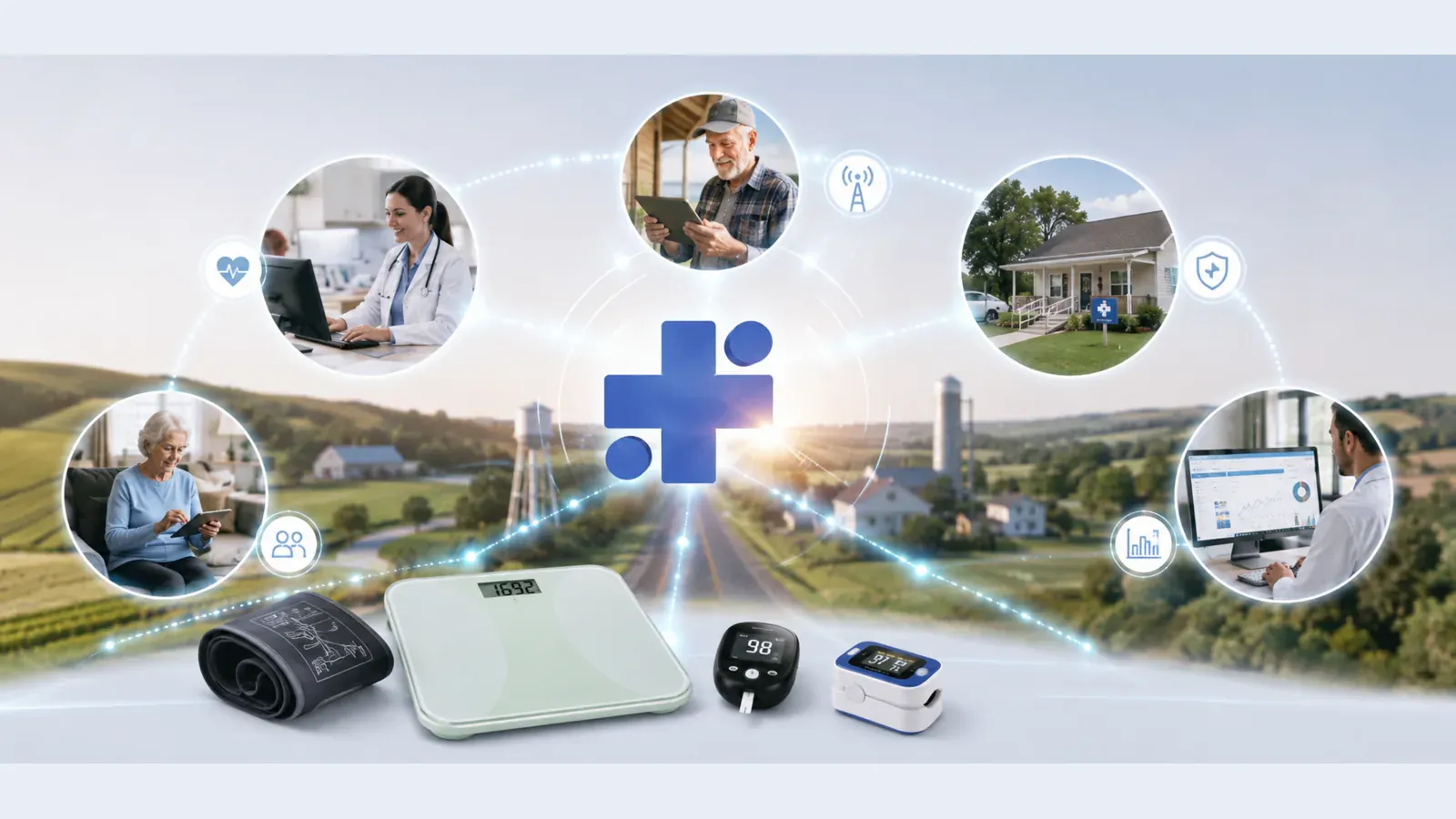
An RPM vendor supplies some or all of the devices, software, logistics, and staff behind a remote patient monitoring program. The questions below cover where vendors differ: how readings reach the care team, how the software documents what Medicare requires, and who does the clinical work.
1. Devices
- FDA status. Is each device FDA-cleared, and under which 510(k) number? Look the number up in the FDA's public 510(k) database. Medicare requires RPM devices to meet the FDA's definition of a medical device.
- Connection. Does the device send readings over its own cellular connection, or does it need a paired smartphone, a hub, or home Wi-Fi? The answer decides which patients can use it. See cellular vs Bluetooth RPM devices.
- Range. Does the vendor have devices for the conditions you plan to monitor: blood pressure, weight, glucose, oxygen saturation?
- Logistics. Who ships, activates, replaces, and collects devices, and how fast?
2. Billing Documentation
Medicare RPM codes run on two clocks: device supply by days of readings in each 30-day period, and treatment management by minutes in each calendar month, with a live interaction. Ask whether the software:
- counts days of transmitted readings per patient per 30-day period;
- logs treatment-management minutes per calendar month and records the live interaction;
- records consent and each patient's start date;
- produces a monthly report your billing team can code from.
Ask to see a sample report. In 2024 the HHS Office of Inspector General (OIG) found that about 43% of Medicare RPM patients did not receive all three parts of RPM: setup, device supply, and treatment management. The software should make gaps like that visible.
3. Clinical Workflow
- Can your clinicians set the thresholds and escalation rules for each patient or condition?
- Does the software separate isolated readings from trends, so staff aren't answering every alert?
- Can it show which patients haven't sent readings recently?
4. Staffing
Some vendors provide software and devices, and the practice's staff do the monitoring. Others also supply nurses or care coordinators. In its CY2027 final rule, CMS set a requirement that Medicare pay for RPM only when it is performed by clinical staff employed by the practice, not contractors, effective January 1, 2029. Ask any vendor that supplies clinical staff how its model works under that rule.
5. EHR Integration
- Which electronic health records (EHRs) does the vendor connect to today, and through which standard: HL7, FHIR, an API, or a document export?
- Do readings arrive in the EHR as data the clinician can trend, or as a PDF report?
- Can the vendor name a current customer on your EHR?
6. Security and Privacy
- Business associate agreement. Under HIPAA, a vendor that creates, receives, maintains, or transmits protected health information on a practice's behalf is a business associate. The practice must have satisfactory assurances, documented in a written business associate agreement, before sharing that information.
- Independent reports. If a vendor cites SOC 2 Type II or ISO 27001, ask for the report or certificate itself, with its date and scope, not a badge.
7. Patient Support
- Who do patients call when a device doesn't work, and when is that line open?
- In which languages is support offered?
- How are devices replaced, and how long does that take?
8. Contract Terms
- How is the program priced: per patient per month, per device, a platform fee, or a mix?
- Is there a minimum term or patient minimum, and a setup fee?
- What happens to devices and data when the contract ends?
- How long does implementation take, and who does what during it?
The Checklist
| Area | Question | Answer |
|---|---|---|
| Devices | FDA 510(k) number for each device? | |
| Devices | Cellular, Bluetooth with phone, hub, or Wi-Fi? | |
| Devices | Who ships, replaces, and collects devices? | |
| Billing | Counts days of readings per 30-day period? | |
| Billing | Logs minutes per calendar month and the live interaction? | |
| Billing | Sample monthly billing report provided? | |
| Workflow | Practice-set thresholds and escalation? | |
| Workflow | Flags patients with no recent readings? | |
| Staffing | Software only, or vendor clinical staff? How does that work under the 2029 rule? | |
| EHR | Which EHRs, which standard, data or PDF? | |
| Security | Signed business associate agreement? | |
| Security | SOC 2 Type II report or ISO 27001 certificate provided? | |
| Support | Patient support hours and languages? | |
| Contract | Pricing model, minimums, term? | |
| Contract | Implementation timeline and responsibilities? |
Where Carematix Fits
Carematix devices arrive preconfigured and transmit over cellular networks, with no smartphone app, Bluetooth pairing, or home Wi-Fi required. The Carematix Wellness System has received five FDA 510(k) clearances. Carematix integrates with EHRs through HL7, FHIR, or a custom interface, chosen with the organization's clinical and IT teams. The platform combines patient readings, staff time, interactive communication, and documentation into a monthly billing-ready report. See how the platform works.
Frequently Asked Questions
What should you look for in an RPM vendor?
Devices with FDA clearance that suit your patients, software that documents days of readings and treatment-management minutes for billing, clinical workflows your team controls, a clear staffing model, EHR integration, a signed business associate agreement, patient support, and clear contract terms.
Does an RPM vendor need to sign a business associate agreement?
Yes, if it creates, receives, maintains, or transmits protected health information on the practice's behalf. HIPAA requires the practice to obtain the vendor's satisfactory assurances that it will safeguard the information, documented in a written business associate agreement.
How do you check an RPM device's FDA clearance?
Ask the vendor for the 510(k) number of each device and look it up in the FDA's public 510(k) Premarket Notification database.
What should RPM software track for billing?
Days of transmitted readings for each patient in each 30-day period, minutes of treatment management in each calendar month, the live interaction with the patient, and the patient's consent.
Should an RPM vendor provide the monitoring nurses?
It depends on the practice, but plan for 2029. From January 1, 2029, Medicare will pay for RPM only when the clinical staff performing it are employed by the practice.
Sources
- CMS, Telehealth & Remote Monitoring (MLN901705), December 2025. cms.gov/files/document/mln901705-telehealth-remote-monitoring.pdf
- CY2026 Medicare Physician Fee Schedule final rule, remote monitoring section, 90 FR 49394–49404. federalregister.gov/documents/2025/11/05/2025-19787
- CMS, CY2027 Medicare Physician Fee Schedule final rule fact sheet, November 4, 2026. cms.gov/newsroom/fact-sheets/calendar-year-cy-2027-medicare-physician-fee-schedule-final-rule
- HHS Office of Inspector General, Additional Oversight of Remote Patient Monitoring in Medicare Is Needed (OEI-02-23-00260), September 2024. oig.hhs.gov/reports/all/2024/additional-oversight-of-remote-patient-monitoring-in-medicare-is-needed/
- 45 CFR 160.103 (definition of business associate). ecfr.gov — 45 CFR 160.103
- 45 CFR 164.502(e) and 164.504(e) (business associate assurances and contracts). ecfr.gov — 45 CFR 164.502
- U.S. Food and Drug Administration, 510(k) Premarket Notification database. accessdata.fda.gov — 510(k) database
This page is general information, not legal, billing, or procurement advice. Review vendor contracts and business associate agreements with your counsel and compliance team.